

1. Basic Properties of Alumina Ceramic Balls
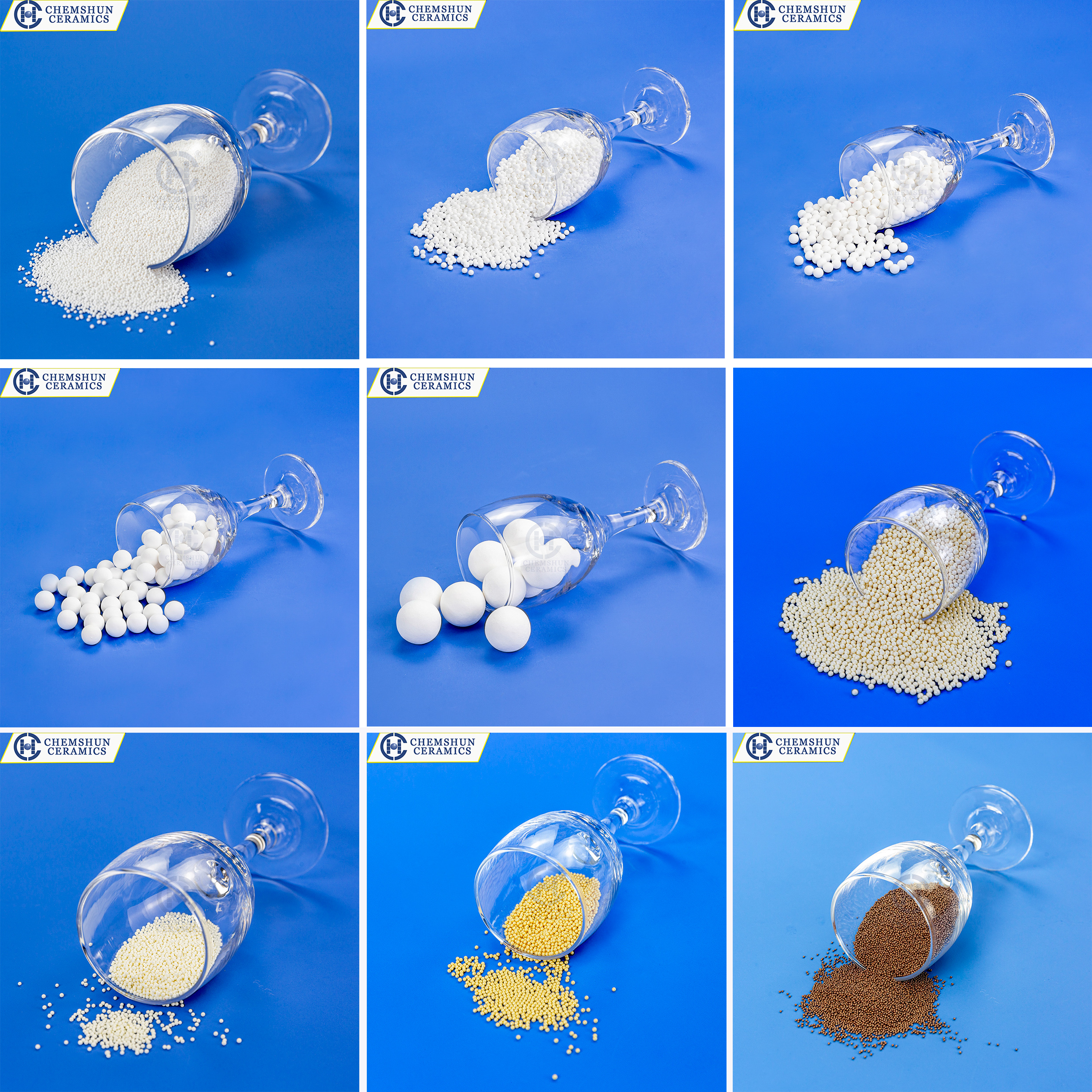
Also known as high-alumina grinding balls, alumina ceramic balls are manufactured from alumina powder through roll forming or isostatic pressing, followed by high-temperature sintering at 1300–1600°C. They serve as non-metallic grinding media specifically designed for mining applications. The alumina content ranges from ordinary medium-alumina grades (60%–85%) to high-purity grades of 92%, 95%, and 99%. With a Mohs hardness close to 9, these balls feature a dense internal structure, extremely low water absorption, and excellent sphericity.
2. Suitable Operating Conditions and Mining Equipment
Compatible grinding equipment: Horizontal ball mills, tower mills, vertical stirred mills, and bead mills. They are primarily used in secondary fine grinding, regrind circuits, and ultra-fine mineral powder processing within beneficiation flowsheets, and are rarely applied in primary coarse crushing stages.
Suitable ore types:
Metallic ores: Molybdenum, iron, copper, lead-zinc, gold, etc. They are especially advantageous in flotation circuits, as they eliminate iron contamination that can interfere with mineral separation.
Non-metallic ores: Kaolin, quartz sand, fluorite, feldspar, talc, barite, and lithium ores. They enable production of high-purity mineral powders while preventing ferrous impurities from degrading product quality.
Grinding mode: Primarily used in wet grinding, but also fully capable of dry ultra-fine pulverization.
3. Core Application Advantages
Elimination of iron contamination in pulp: Unlike traditional chromium steel or cast iron grinding balls, alumina ceramic balls do not shed iron particles, thus preserving the surface physicochemical properties of ores. This improves flotation recovery rates and ensures the quality of high-purity non-metallic mineral powders.
Superior wear resistance and cost-effective consumables: With a Vickers hardness of 1400–1600 HV, their wear rate is significantly lower than that of steel media. Longer replacement cycles reduce downtime for media changeouts, increasing mill operating uptime.
Resistance to acidic/alkaline pulp corrosion: Chemically inert, they remain undissolved and unaffected in acidic leaching pulps or alkaline flotation slurries, making them compatible with complex reagent environments.
Uniform grinding fineness, energy savings, and noise reduction: With adequate density, they provide stable impact and shear grinding effects, yielding a narrow particle size distribution of the product. Ceramic materials generate lower impact noise, resulting in overall mill operation noise levels lower than those with steel balls. They are ideal for ultra-fine grinding, easily achieving micron-sized mineral powders.
Reduced equipment wear: The relatively mild impact of ceramic balls reduces abrasion and impact damage to mill liners, prolonging liner service life.
4. How to Select the Right Alumina Ceramic Balls
Alumina purity selection:
For general non-metallic ore coarse grinding: choose 65%–80% medium-alumina balls for better cost-effectiveness.
For high-purity powders such as molybdenum, lithium, and kaolin: prioritize 92% or higher high-alumina ceramic balls.
For high-standard ultra-fine powders: use 95%–99% high-purity alumina balls.
Ball size matching principles:
For coarser feed particles: select large-diameter balls of φ20–φ40 mm.
For secondary fine grinding and regrind stages: use small-to-medium balls of φ5–φ15 mm.
For ultra-fine stirred milling: employ micro-sized alumina beads of 0.2–3 mm.
Always utilize a graded mix of multiple ball sizes within the mill to optimize packing density and improve grinding efficiency.
5. Main Mining Application Areas
Secondary fine grinding prior to flotation of non-ferrous metal ores, and regrinding of flotation tailings.
Ultra-fine pulverization of spodumene and lepidolite lithium ores.
Deep processing of high-purity non-metallic minerals such as quartz sand, kaolin, and feldspar.
Resource-recovery grinding of ultra-fine tailings.
Ultra-fine grinding operations supporting leaching processes in mineral processing.
Post time: Aug-19-2026