

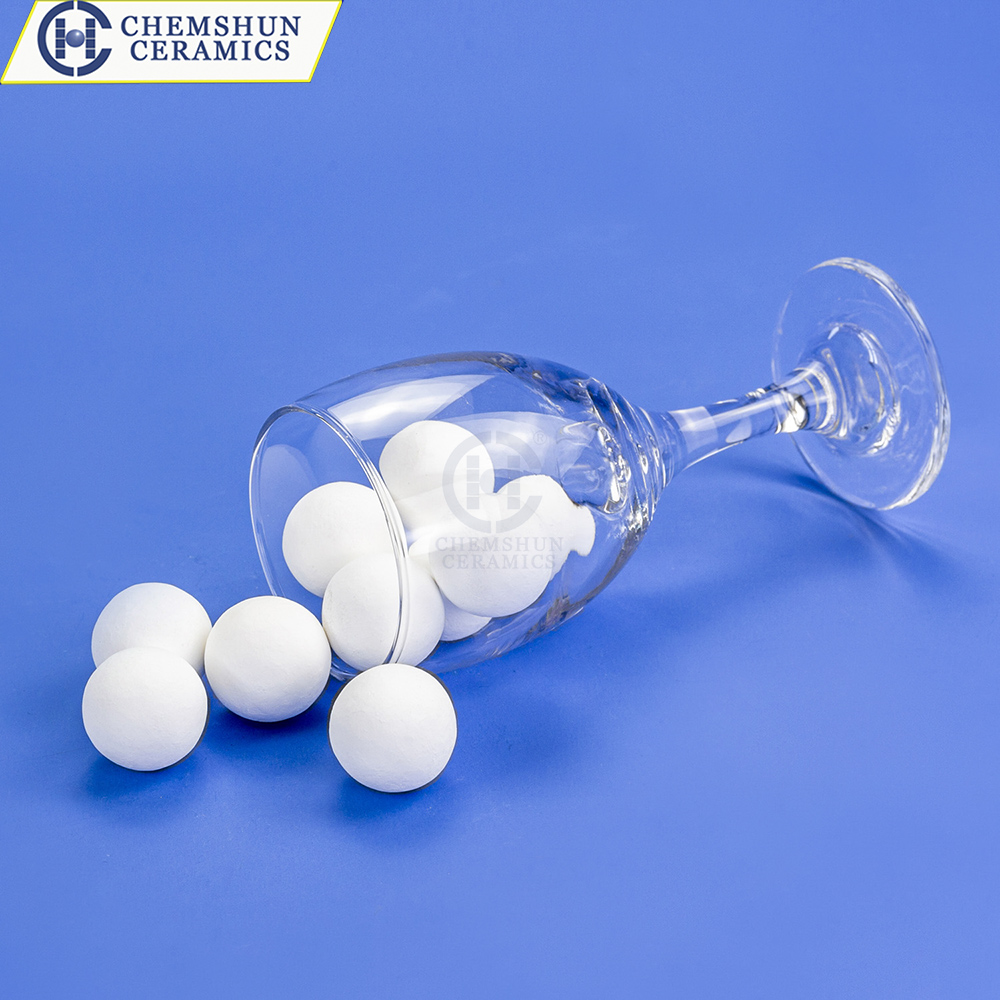
High-alumina alumina ceramic grinding balls are advanced engineering ceramic materials primarily composed of aluminum oxide (Al₂O₃), typically with a content exceeding 90%. They exhibit high hardness, superior wear resistance, excellent chemical stability, and low contamination, making them widely applicable in wet or dry grinding processes for industries such as ceramics, paints, chemicals, mining, and electronic materials. With a density generally above 3.6 g/cm³ and a Vickers hardness of up to HV1500 or higher, they significantly enhance grinding efficiency while reducing media consumption.
Their core advantages lie in significantly improving grinding efficiency and economic performance. High hardness (Mohs hardness grade 9) ensures rapid pulverization of hard materials; a uniform microstructure provides consistent wear rates and extends service life. Excellent chemical inertness allows resistance to strong acids and alkalis, preventing contamination of ground materials. Extremely low iron residue (typically below 0.01%) makes them particularly suitable for purity-sensitive applications, such as lithium battery materials, high-grade glazes, and electronic ceramics.
The manufacturing process involves tightly controlled powder preparation, isostatic pressing, and high-temperature sintering to achieve high densification, ensuring low porosity and high fracture toughness. Quality inspection covers dimensional accuracy, sphericity, hardness, and impact resistance to meet the requirements of various grinding equipment and process conditions. Proper selection of specifications (e.g., diameters from 1mm to 50mm) and filling ratios can further optimize grinding fineness and energy consumption efficiency.
With increasing demands for finer particle size and higher purity in industrial upgrading, high-alumina alumina ceramic grinding balls have become indispensable grinding media in modern chemical and new material sectors. By enhancing product quality and reducing overall costs, they provide a reliable technical solution for precision processing industries. In the future, optimization of material formulations and advancements in surface modification technology will further expand their application scope.
Post time: Feb-11-2026