

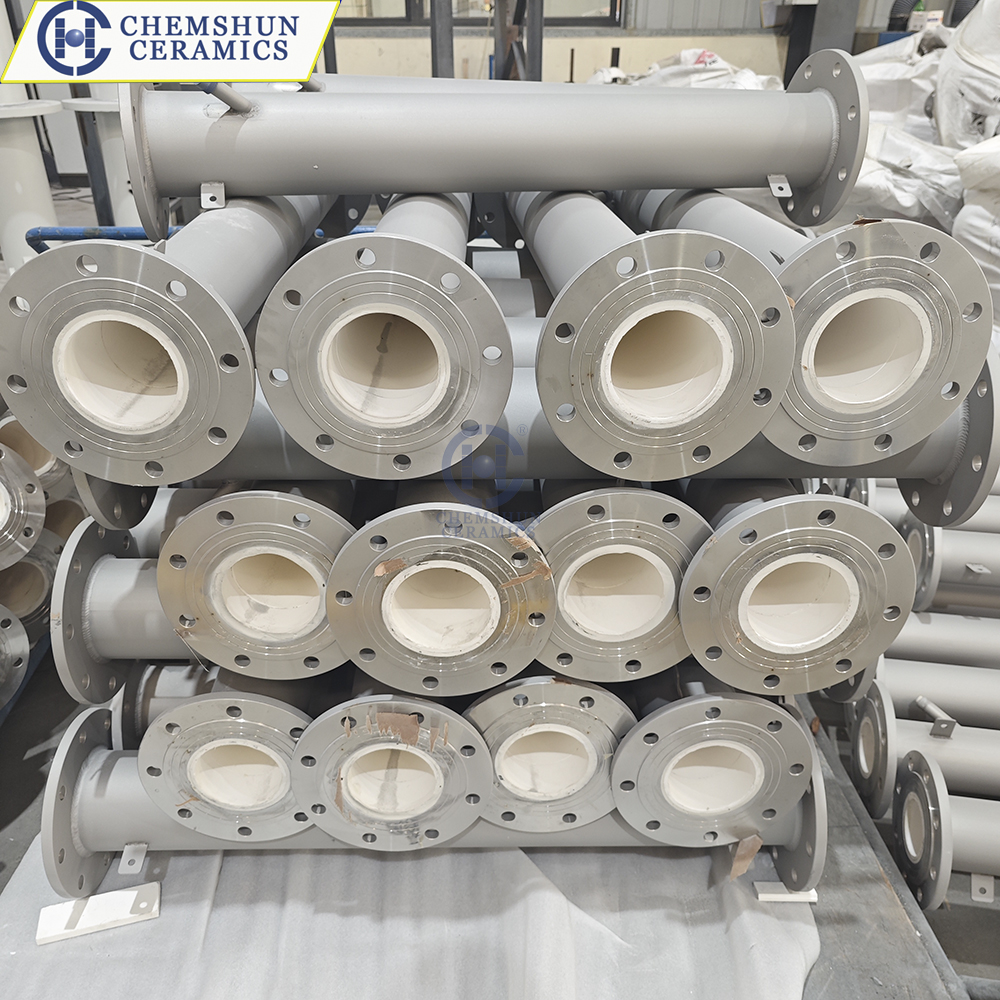
Alumina ceramic lined steel pipe is a high-performance composite pipeline manufactured by securely bonding high-purity alumina ceramic to the inner wall of a steel pipe. The ceramic layer typically contains no less than 95% alumina (Al₂O₃), with a Rockwell hardness of above HRA85 and a Mohs hardness of approximately grade 9, second only to diamond. This structure combines the high wear resistance of alumina ceramic with the strength and toughness of steel, making it suitable for severe abrasive conditions. Pipeline designs comply with engineering standards and allow customization in length, diameter, and connection methods.
The primary manufacturing processes are the adhesive bonding method and the welding method. The adhesive method uses high-strength, heat-resistant adhesive to firmly fix pre-formed alumina ceramic tiles onto the inner steel wall, suitable for medium-to-low temperature environments (generally ≤150°C). The welding method employs special welding techniques to directly connect perforated ceramic tiles to the inner steel wall, creating a mechanical metal interlock between the ceramic and the base pipe, which enables resistance to higher temperatures (generally ≤350°C) and stronger impact. Both processes ensure a smooth, crack-free ceramic liner with reliable bonding to the base pipe.
The core advantages of this pipeline lie in its exceptional wear resistance and extended service life. Under identical working conditions, its wear resistance is over 20 times that of ordinary carbon steel pipes, significantly reducing replacement frequency and maintenance costs. Additionally, it offers good corrosion resistance and a smooth inner surface, which minimizes material buildup and transport resistance. It is widely used in industries such as power generation, metallurgy, mining, and chemical processing for powder transport, tailings handling, and pneumatic conveying systems, effectively addressing excessive pipeline wear.
Post time: Jan-26-2026