

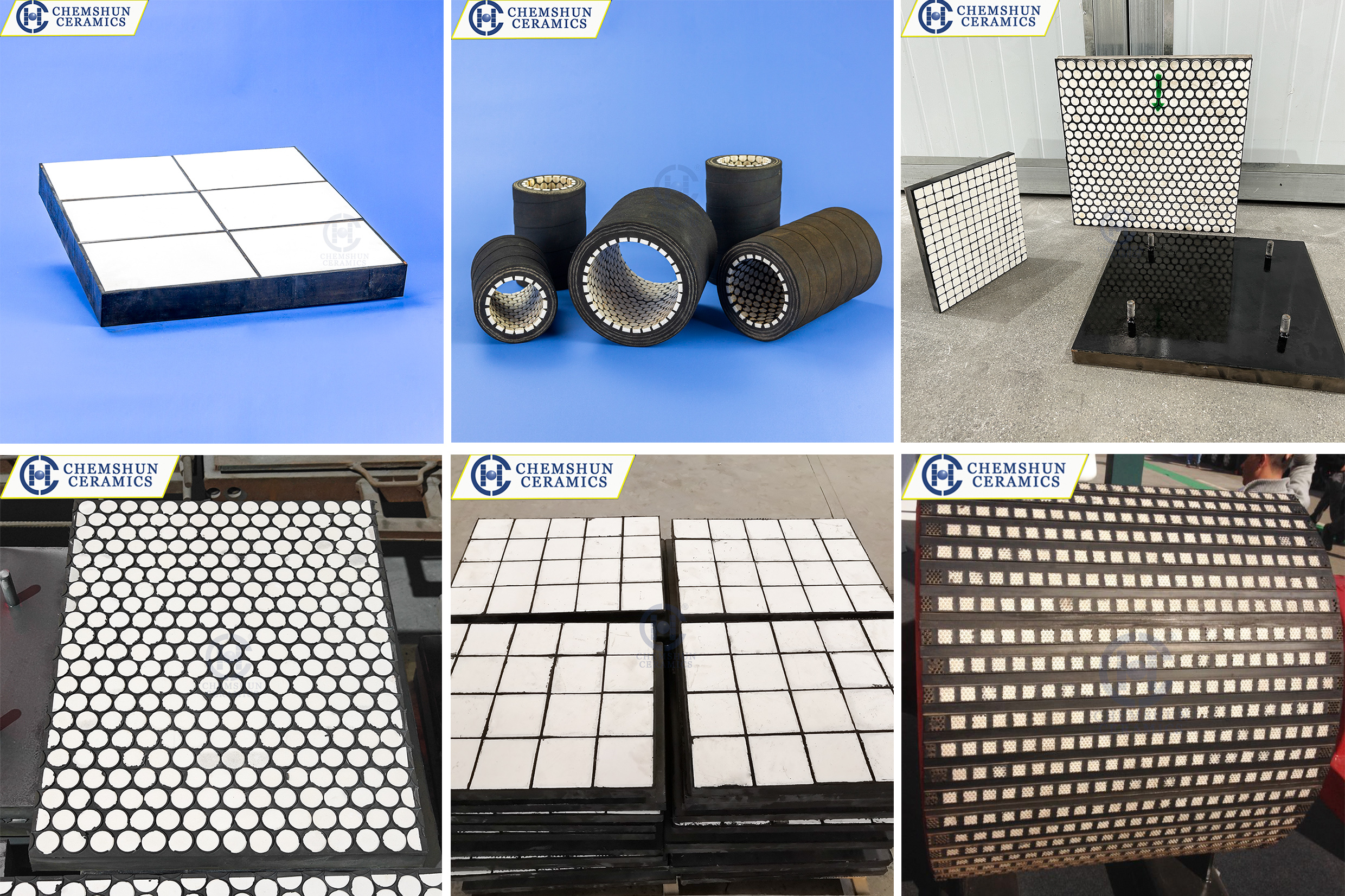
Wear-resistant alumina ceramic vulcanized plate is a functional composite material made by bonding high-purity alumina ceramic (Al₂O₃ content ≥92%) with a rubber matrix via a hot vulcanization process. It combines the high hardness of ceramic with the elastic buffering capacity of rubber, making it suitable for surface protection of industrial equipment under high-impact and high-wear conditions. Typical alumina ceramic layer hardness reaches HRA 85-90, density ranges from 3.6 to 3.9 g/cm³, and its wear resistance is about 10 to 15 times that of ordinary steel plates.
Key performance specifications include: ceramic tile thickness typically 15-30 mm, rubber layer thickness 4-15 mm, and overall peel strength ≥12 kN/m. The operating temperature ranges from -40°C to +120°C, with a momentary tolerance up to 150°C. The coefficient of friction is below 0.2, effectively reducing material adhesion and blockage risks during conveying. Through the vulcanization process, chemical crosslinking at the ceramic-rubber interface prevents detachment or delamination, extending service life by 3-5 years compared to conventional manganese steel liners.
Primary applications include: transfer points of conveyor belts, chutes, and hoppers in mining and aggregate industries; feed chutes and separator housings in steel and cement plants; and coal drop tubes in power plant coal handling systems. During installation, the vulcanized plate is fixed onto the equipment base plate via cold bonding or hot vulcanization, without complex mechanical fasteners. For high-wear zones, a zirconia-toughened composite formulation (Al₂O₃-ZrO₂) can be selected, increasing fracture toughness to 4.5-5.5 MPa·m¹/², further resisting impact damage from large-sized materials.
Post time: May-11-2026