

In industries such as thermal power, mining, coal, and building materials, powder and granular material conveying systems are subject to severe wear. Coal bunkers, ore silos, ash silos, and conveyor chutes are among the most wear-prone equipment. Raw coal, mineral powder, fly ash, sand, and gravel continuously scour the inner walls of bunkers and chutes at high speed. Combined with gravity impact and friction from the materials, traditional carbon steel and manganese steel liners are highly prone to thinning, perforation, and deformation.
Most companies face common pain points. Ordinary steel plate liners have a short service life and require replacement every three to six months. Frequent shutdowns for disassembly and replacement disrupt production schedules, reduce capacity, and incur substantial labor and spare parts costs. In some applications, wear-resistant coatings and polyurethane liners provide short-term wear relief, but they cannot withstand high temperatures, age easily, and tend to detach. They are poorly suited to high-drop, high-flow material scouring conditions. For a long time, equipment wear and frequent maintenance have been key weaknesses that restrict continuous production and drive up operating costs.
For high-intensity scouring and wear conditions in coal bunkers, silos, and chutes, alumina wear-resistant ceramic liners are the optimal solution. With the core properties of alumina ceramic—ultra-high wear resistance, impact resistance, corrosion resistance, and high-temperature resistance—and proven adhesive bonding and bolt-on installation methods, they provide comprehensive protection for equipment inner walls and solve material scouring wear at its root. They are suitable for various powder and granular material conveying and storage equipment.
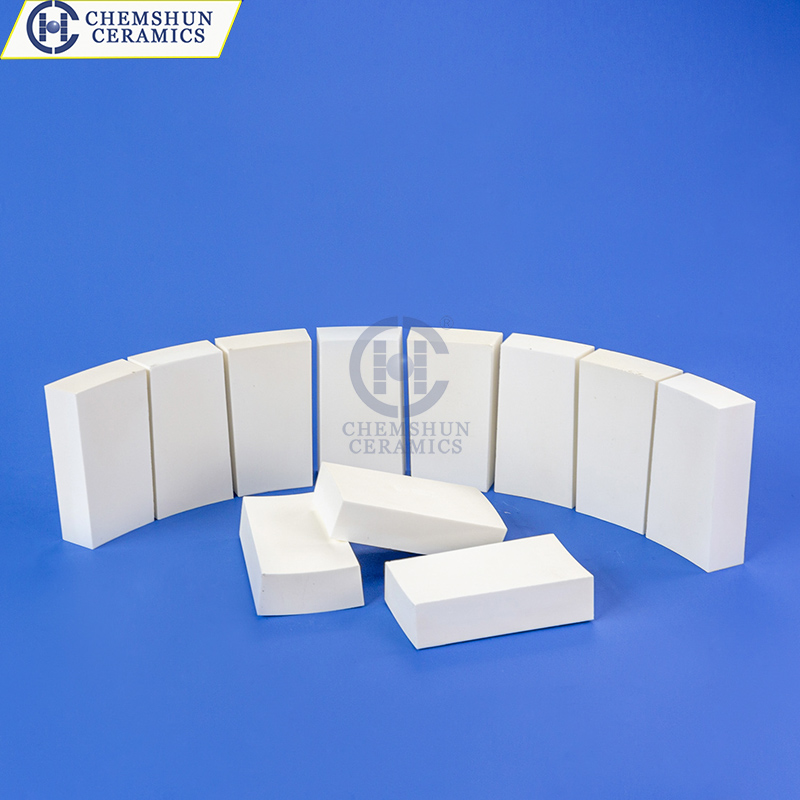
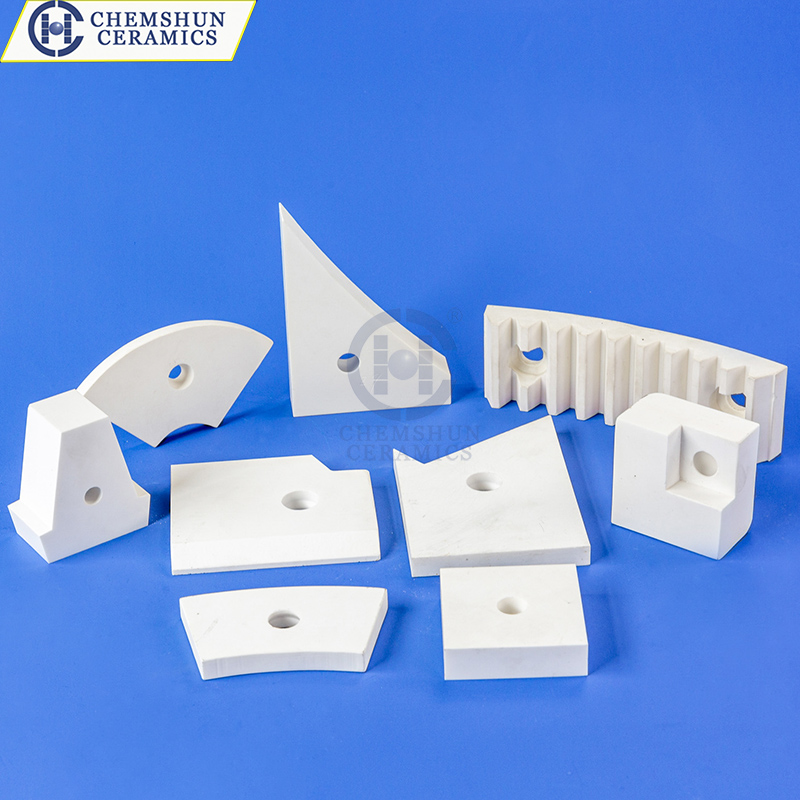
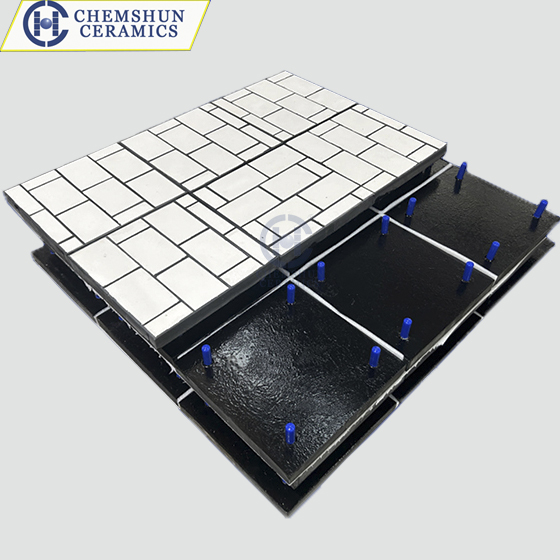
At present, the three main types of alumina ceramic liners used in the industry are designed for different installation scenarios and operating conditions. The first is the adhesive-bonded ceramic liner, which is fixed with a high-strength industrial adhesive. It is easy to install and shortens installation time, making it suitable for flat bunker and chute inner walls and normal powder scouring conditions. The second is the bolt-on ceramic liner, which is mechanically fastened through pre-drilled bolt holes in the ceramic. It provides stronger fastening and greater impact resistance and resistance to detachment, making it suitable for large-particle, high-drop, and high-impact wear applications. The third is the curved and custom-shaped ceramic liner, which can be custom-made to match bunker curvature and irregular chute structures. It fits equipment curves perfectly with no gaps, preventing material buildup and dead-corner wear. It is suitable for non-standard, irregular equipment.
Actual field results show that the protective advantages of alumina ceramic liners are significant. Traditional carbon steel liners last only six months to one year, while 95% alumina ceramic liners can last five to ten years, with wear resistance more than 10 times higher. The ceramic material does not rust and resists corrosion, so it can withstand humid, acidic, and alkaline flue gas environments without the accelerated wear caused by rust on steel plates. At the same time, the ceramic liner has a smooth surface and a low friction coefficient. This reduces material-induced wear and prevents material sticking and clogging, improving material conveying efficiency.
In terms of installation, Pingxiang Chemshun Ceramics Co., Ltd. has extensive on-site installation experience. Before installation, it grinds the equipment inner walls and removes rust and dust to ensure a flat, clean bonding surface. It selects ceramic liners with specifications and fastening methods suited to the equipment’s operating conditions, and strictly controls the adhesive mixing ratio, bonding spacing, and bolt tightening torque to ensure a tight, secure fit and eliminate detachment and hollow spots. For critical wear areas such as bunker corners, discharge outlets, and high-drop scouring zones, it uses thicker ceramic liners and more frequent fastening to strengthen protection.
Numerous field cases confirm that after installing alumina wear-resistant ceramic liners in coal bunkers, silos, and chutes, equipment failure rates drop significantly, with little need for frequent shutdowns for maintenance. This effectively ensures continuous and stable production line operation and greatly reduces long-term maintenance costs.
Post time: Sep-15-2026